
Mastering Lob Defence from the Padel Service Line
The service line in padel is a critical defensive perch. When an opponent tries to push you back with a lob, your response from this position determines the flow of the entire rally. Mastery here allows you to neutralise aggressive net pressure, buy time to reposition, and instantly transition from a pressured defensive posture to a controlled counterattack.
For social players and families, understanding this position is key to enjoying longer, more competitive rallies. It stops you from being constantly pinned to the back glass and instead forces your opponents into predictable, high-error responses.
When to Defend from the Service Line
You've been pushed from the net: The most common scenario is retreating one or two steps after a strong volley or smash from the opposition forces you from your ideal net position.
Neutralising an attacker's rush: If opponents are rushing the net too aggressively, a deep, controlled lob from the service line buys you time to reset or allows your partner to take a better defensive stance.
As an initial defensive perch: If the service return forces you to stay forward, the service line is the best place to handle the next shot (which is often a short, offensive lob).
Reading Your Opponents’ Lobs
Track the ball as soon as it leaves the opponent's racquet. Every lob tells a story:
Height and Depth: A very high, deep lob is designed to push you to the back wall and is a time-buying tactic. A shorter, lower lob is an invitation for a rapid volley or smash from the net and must be managed quickly.
Anticipation: Observe your partner's positioning and the opposing players’ split steps. If they look aggressive, a defensive lob back is necessary. If they are pulling back, a more offensive reply is possible.
The Early/Late Signal: An early-contact lob often signals a push to the back fence. A late-contact lob may be short, designed to pull you forward and exploit the open space.
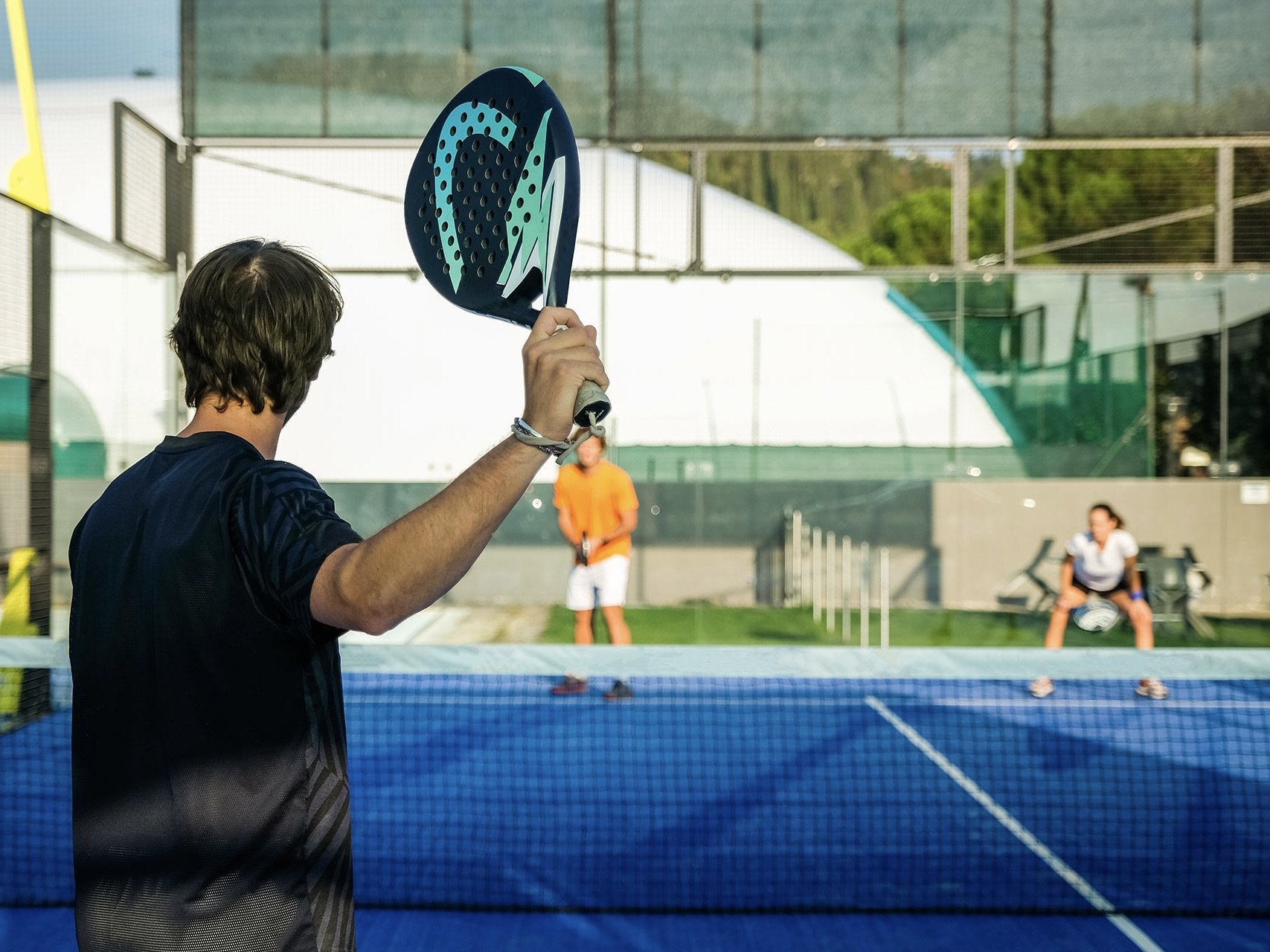
Source: Padel39
Core Techniques: Footwork and Racket Control
Footwork and Stance
Balanced Base: Stand slightly closer to the centre line with knees bent. Your weight should be ready to transfer instantly, either forward for a short ball or backward for a deep lob.
Stay Behind the Ball: Use small, quick lateral steps (often called "shuffling") to ensure you are always balanced behind the ball’s flight path. This allows your momentum to redirect the ball rather than just blocking it, adding power with less effort.
Racket Preparation and Lob Selection
The goal is to neutralise the net pressure with depth, not power.
Deep, Controlled Return: Keep the racket relaxed and low during the initial phase of the backswing. Accelerate through the contact zone with a gentle upward motion, aiming for a deep trajectory that lands behind the opponents’ service box. This is your primary tactic to neutralise aggressive opponents.
The Slice/Reset: When facing a very high lob that pushes you back, opt for a defensive slice or a low, fast return to the back of the court. This shot is designed to reset the rally tempo and give you time to regain a better court position.
The Offensive Reply: If the lob is short and hangs in the air, a well-placed passing shot or a bandeja-like reply can instantly turn defence into a temporary net advantage.
Transition to Offence
The true masterstroke of service-line defence is the two-to-three-step transition to attack.
Shot Execution: After hitting your controlled defensive shot, immediately step forward one or two steps toward the centre of the court.
Disrupt the Rhythm: Your controlled return will disrupt the opponents' rhythm. Use the resulting space behind them by aiming the ball wide or high to force them to move, creating a critical window for your next aggressive volley or smash.
Controlled Attack: The aim is to move from defence to a controlled attack within two or three shots. Do not try for a winner immediately; aim to set up the winning shot.
Drills and Fixes for Better Play
Beginner-Friendly Drills
Lob-Returns Drill: Stand at the service line. Have your partner feed you a variety of lobs (high, mid, low) and practice returning them deep behind the opponents' service box. Repeat 10–15 reps on each side.
Quick Transition Drill: After each successful lob return, immediately move two steps toward the centre and prepare to hit a controlled volley or a short drop shot as a follow-up.
Shadow Defence: Without balls, practise the footwork and racket preparation to simulate a lob read, focusing on balance and rhythm.
Common Mistakes and Quick Fixes
When defending from the service line, players often make a few key errors:
Overextending toward the net after the return. The fix is to stay patient and recover to a balanced position at the service line or slightly behind it before attempting the follow-up volley.
Poor racket preparation leading to mishits. The fix is to keep it early, keeping the racket face angled and close to the body. Prepare the shot quickly to maintain control on contact.
Failing to read the lob height and depth. The fix is to practise variation, working with a partner or coach who consistently varies the lob height and spin to improve your anticipation and footwork speed.
