
Master the Padel Glass-Ball Scoop Volley: Technical Guide to Offensive Lift and Control
The glass-ball scoop volley is a lower-risk, high-reward shot in padel. It leverages backspin, a low trajectory, and precise contact near the back glass to neutralize pace, keep rallies alive, and force errors from opponents. When executed correctly from the service line, it becomes a crucial transitional weapon, creating angles and setting up your next attacking move.
This guide distills the key mechanics, footwork, grip, and practice drills needed to turn this volley into a reliable offensive tool.
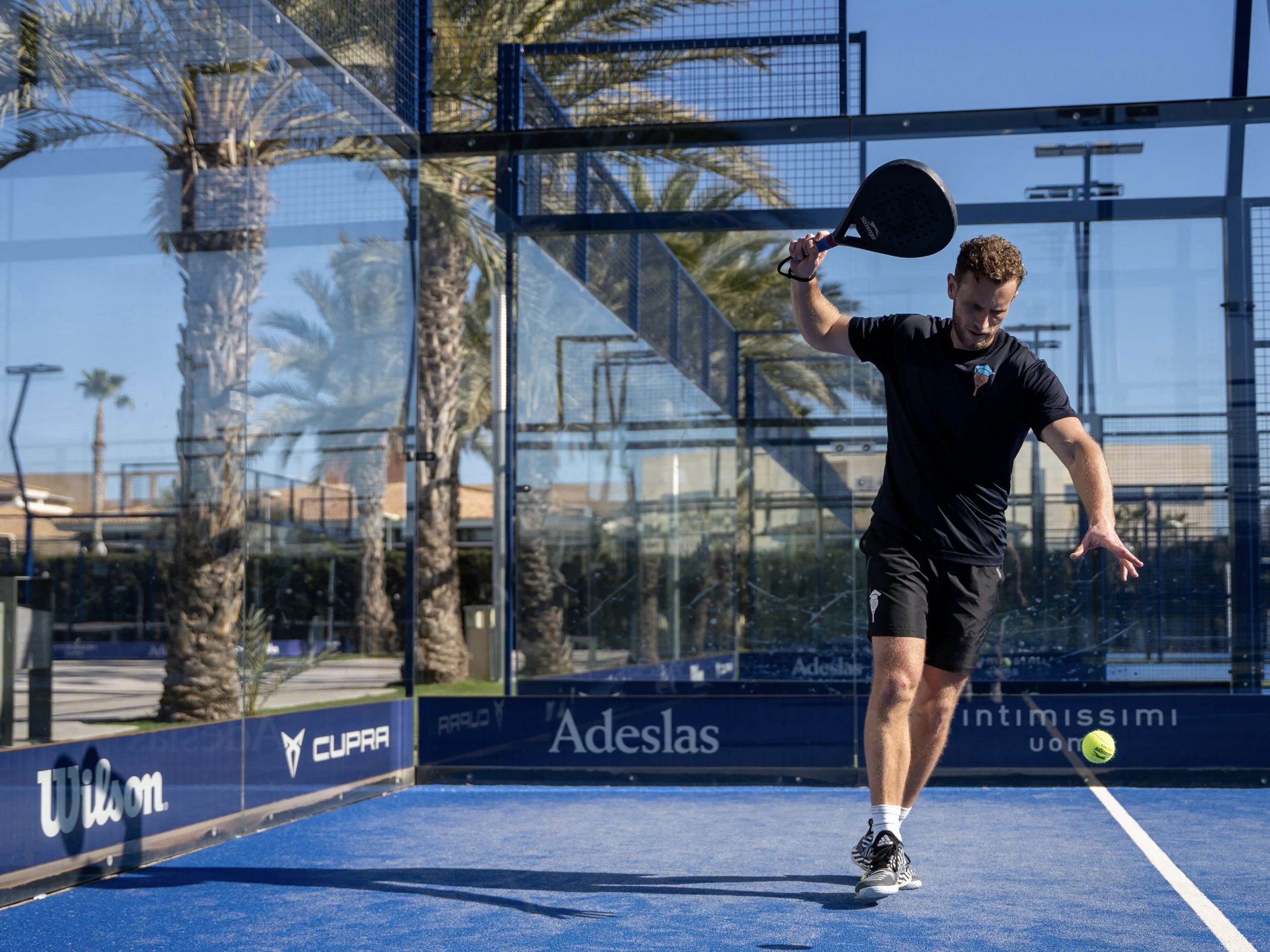
Source: The Padel School
Key Mechanics and Technique
Mastering the scoop volley requires precision in four areas: contact, swing path, grip, and racket orientation.
Contact Point and Path
Contact: Strike the ball slightly in front of the body. This is essential to maintain control, impart backspin, and ensure the ball stays low off the glass.
Path: Use a short, rounded swing that finishes low and close to the body. This compact path minimises loft and maximises control after the ball rebounds from the back glass.
Grip and Racket Orientation
Grip: Employ a continental grip (or "hammer grip"). This offers the necessary versatility to achieve both control and the desired slice/backspin when needed.
Racket Face: Start the motion with the racket face slightly open. As you make contact, rotate slightly into a stable finish that ensures the ball is directed low and deep into your opponent’s half.
Glass Interaction and Spin
The primary objective is to generate backspin (slice). This spin is critical as it prevents the ball from rising too quickly after contact with the back glass, resulting in a low, skimming trajectory.
This low trajectory challenges your opponents, forcing them to lift the ball high enough for a rally-ending shot, which often leads to a weak reply.
While gentle topspin can be used sparingly to control pace, the main focus is a "kiss-off" the glass that maintains its low height.
Tactical Applications
The scoop volley is not merely a defensive shot; it is a tactical weapon designed to create openings.
Offence from the Service Line
Use the scoop volley to reset the point with a low, fast return. This forces a weak or defensive reply from your opponents, immediately allowing you to follow up with a decisive drive or poach at the net.
Aim for depth behind your opponent’s backhand or into the centerline. The tight angle and spin off the back glass cause the ball to skid, severely limiting their passing options.
2. Setting Up Finishing Opportunities
Immediately after a successful glass-ball scoop, rapidly transition and prepare for a finishing shot.
Exploit the weak reply by hitting a subsequent forehand or backhand volley at a steeper angle, or execute a lob if the opponents are aggressively crowding the net.
Combine the shot with quick, deliberate court movement to reduce the time your opponent has to react, effectively turning the rally in your favour.
Common Mistakes and Fixes
Mastering any technique involves identifying and correcting common errors.
Overhitting or Bouncing Too High: Keep the contact point in front and use a short, compact swing. Practise with wall drills to ingrain the restricted swing pathway.
Relying Solely on the Wrist/Arm: Engage the legs and torso to power the shot. Think of the volley as a body-driven stroke, not just an arm motion, to gain control and stability.
Poor Glass Awareness: Practise reading the angle of the back glass and adjust contact height accordingly. The primary focus must be to ensure the ball stays low after the rebound.
Drills to Build Consistency
Incorporate these structured drills to make the glass-ball scoop volley a reliable part of your game.
Wall-and-Glass Drill: Stand at the service line and rally against a simulated back-glass bounce. Focus intensely on contacting the ball slightly in front and maintaining a low follow-through.
Controlling Pace Drill: Have a partner feed you balls at varying speeds and angles. Your sole aim is to consistently produce a low-skimming, slice response off the back glass, irrespective of the incoming pace.
Grip and Finish Progression: Focus specifically on using the continental grip. Emphasise a stable racket path and a compact finish for every contact to build muscle memory.
Open-Stance vs. Step-In Drill: Alternate between hitting the scoop volley using an open-stance (when rushed) and a step-in contact (when balanced). This develops necessary adaptability for different ball locations and pressures.
Coaching Cues
Eyes should follow the line of the ball.
Hands must remain in sync with forward body movement.
Focus on a quiet, compact swing path; minimise unnecessary movement.
Keep the non-playing hand active for balance and to help initiate torso rotation.
Reset quickly to the ready position immediately after contact to exploit the next ball.
