
In padel, points are often won or lost not because of raw power, but because of how well players read angles and control ball speed after each bounce and wall rebound. Mastering these two elements turns the walls from a source of chaos into your biggest tactical ally.
Why Angles And Speed Matter
Padel is played in a cage, so every shot potentially interacts with the floor, glass, and mesh, creating complex trajectories. A player who understands how the ball will rebound can anticipate earlier, position better, and choose more intelligent shots. Controlling speed on top of that allows you to dictate the tempo of rallies instead of reacting to your opponents’ pace.
The Basics Of Rebound Physics
When the ball hits the ground or glass, two main things change: direction (angle) and speed. A steeper incoming trajectory and higher speed usually produce a more aggressive rebound, while a slower, higher ball tends to sit up and give you more time. Spin also plays a role: slice tends to keep the ball lower after the bounce, while topspin makes it jump up more. Even small changes in your racket face angle at impact can significantly change the height and direction of the outgoing ball.
Reading The First Bounce
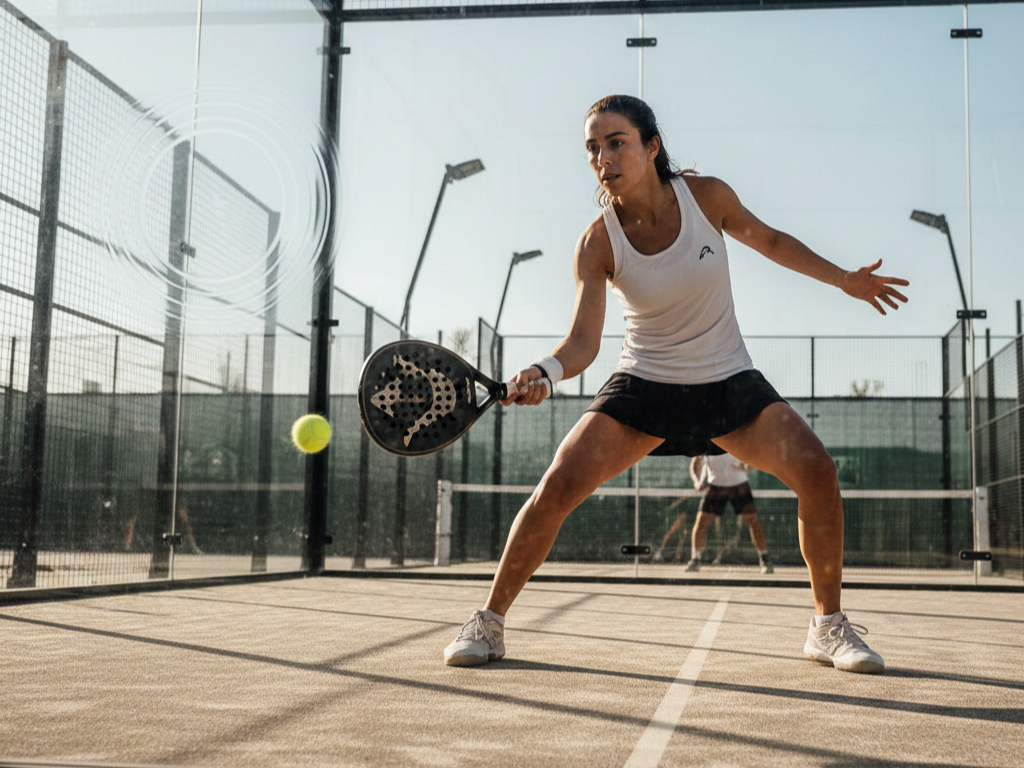
Everything starts with the ball’s first bounce on your side. If the first bounce is fast and low, you must react quickly, get low with your legs, and expect a sharp, lower rebound off the glass. If the first bounce is slow and higher, you can afford more time and often step into the ball after the glass for a more controlled counter. Training your eyes to “scan” the speed and height of the first bounce is the foundation of predicting what happens on the wall.
Single-Wall Rebounds: Back Glass
On simple back-wall rebounds, your distance to the glass is critical. Standing roughly one step to one and a half meters from the back glass gives the ball room to complete its rebound while still leaving space for you to step forward into contact. If you stand too close, the ball jams you; too far, and the ball dies in front of you. The ideal moment to hit is usually once the ball has bounced off the glass, reached its lowest point, and just starts rising again, when its speed is more predictable and easier to control.
Side-Wall And Corner Angles
Side-wall rebounds introduce lateral angles that can pull you off the court if you read them late. When the ball hits the side glass, expect it to continue roughly in the same overall direction but shifted sideways. In the corners, small changes in the incoming angle can create very different exits: some balls rebound “closing” back into the court, others “open” up towards the side fence. Learning to recognize where the ball will exit in the corner lets you decide early whether to back up, move sideways, or let the ball pass and play it comfortably after the glass.
Double-Wall Rebounds: Opening Vs Closing
Double walls (back plus side, or side plus back) are where angles become truly tactical. When the ball hits the back wall first and then the side, it tends to rebound back towards the center of the court, which often gives you a safer contact zone. When it hits the side wall first and then the back, the exit trajectory usually continues toward the side area, often forcing you to move laterally and backwards at the same time. Recognizing the sequence of wall contacts as early as possible allows you to set up your feet instead of reaching with your arm at the last second.
How Racket Face Angle Changes The Rebound
Your racket face angle at impact largely determines where and how the ball leaves your strings. A more “closed” racket face tends to send the ball lower and faster, while a more “open” face lifts the ball higher and slower. Even on the same ball, a subtle change in racket angle can turn a neutral defensive shot into a deep, floating lob or a low, skidding counter. This is why a neutral grip that allows easy adjustment of the racket face is so useful when playing close to the glass and dealing with varied rebounds.
Using Spin To Control Height And Speed
Spin is one of your main tools for speed and angle control. A slice stroke, especially on defensive shots from the back, slows the ball down, keeps it low after the bounce, and can make it “die” after rebounding from the opponent’s glass. This reduces their time to attack and forces them to lift the ball. A flatter or slightly topspun shot increases speed and can push opponents back, but also gives them more energy to work with if they time the ball well. Choosing the right spin based on your position and the opponent’s court position helps you manage the rally tempo.
Positioning: Creating The Right Space
Good footwork is what turns theoretical angle knowledge into practical control. Keeping an appropriate distance from the glass—enough space for the ball to rebound fully, but not so much that it drops in front of you—makes your contact point more comfortable. Small split steps and short sidesteps are more effective than big lunges when tracking tricky angles. Instead of reaching with the arm, think of “moving your body to the ball” so you can hit in front of you with balance and a compact swing.
Controlling Tempo Instead Of Chasing It
Speed control in padel is not only about hitting hard; it is about knowing when to slow the game down. In defense, a softer, higher lob can reset the rally and buy time to recover your net position. A medium-pace, deep ball that bounces close to the opponent’s back glass can trap them in awkward rebounds. In attack, accelerating through the ball at the right moment—when you are balanced and close to the net—allows you to finish points without giving the opponent easy defensive angles off the walls.
Simple On-Court Drills To Train Angles And Speed
Players can train angle reading and speed control with targeted drills. For example:
Stand at the back and let balls pass to rebound off the glass, hitting them only once they have completed their trajectory and started to rise, focusing on clean, controlled contact.
Work in the corner with a partner feeding balls that hit one wall or two; your task is to move your feet first, then strike with a compact swing and consistent height over the net.
Alternate between slice and flat shots while aiming at different depth targets, observing how the rebound angle and speed change for each spin and racket face angle.
Turning Rebounds Into Tactical Weapons
When players deliberately use the walls rather than fear them, rebound angles become a weapon. A well-placed angled shot that travels through side and back walls can drag opponents into uncomfortable positions, opening spaces for the next volley. Learning to combine early reading of the first bounce, smart positioning, racket face control, and spin helps transform chaotic rebounds into predictable patterns. Over time, this understanding lets you slow the game when under pressure and accelerate when it is time to attack.
